CMHC’s New Energy Criteria: Modcity’s Perspective


As a starting point, it is important to note that the MLI Select program has different requirements depending on whether a building is a new build or a renovation, and whether it falls under Part 9 or Part 3 of the building code. For this article, we’re discussing new-build Part 9 buildings only, which is what Modcity builds.1
The transition period for CMHC’s updated MLI Select energy criteria ended on September 30, 2026. The change was announced well ahead of time, giving applicants an opportunity to submit projects under the previous framework. Now, we need to tackle the new points system.2
New Framework
Under the previous framework, the highest energy-efficiency score required at least a 40% reduction in energy consumption and greenhouse gas emissions against NBC 2015 or NECB 2017. The current new-construction framework measures energy-consumption improvements against the updated 2020 codes.3
MLI Select is a points-based program. To earn the maximum 50 energy points under the Part 9 low-rise route, a project now needs to achieve 70% better energy performance than NBC 2020 Tier 1.4
It is not as simple as increasing from 40% to 70%. Since the reference codes have also changed, each design needs to be reassessed by the project’s qualified energy consultant.
Modcity submitted 30+ fourplex and sixplex buildings, roughly 200 units in total, under the previous framework. We have spent the last four months analyzing the best way to meet the new criteria in a cost-effective and sustainable manner.
In our view, achieving the full 50 energy points remains important to maximizing financial feasibility, as the total points influence amortization options, insurance premiums and financing assumptions.
Modcity’s Approach
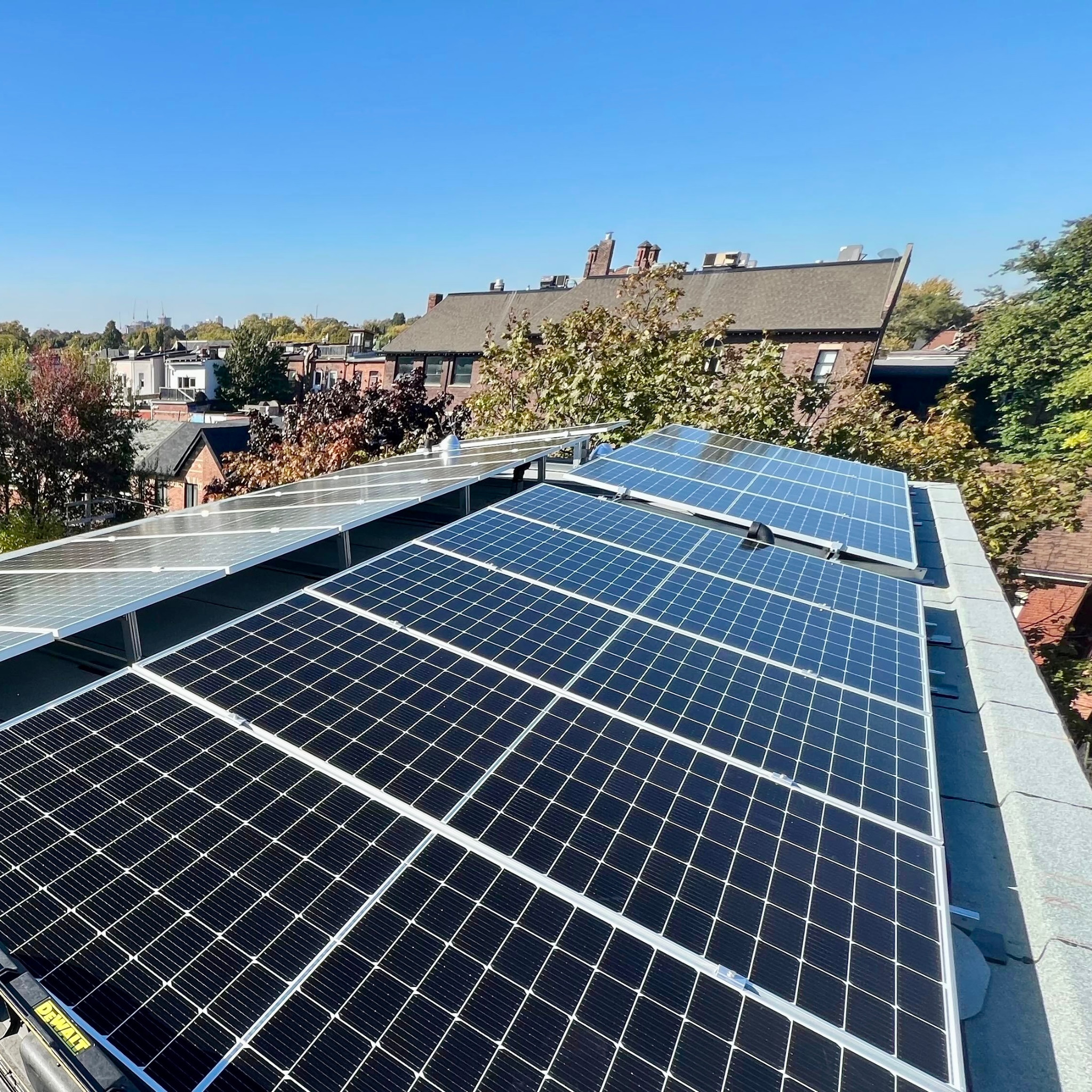
Our analysis points to a combination of mechanical systems similar to those used under the previous framework, an improved building envelope, primarily windows and insulation, and, most importantly, solar panels to help reach the new thresholds.
Solar panels are familiar on industrial buildings but are still less common on residential rooftops in Toronto. Nearby tree canopy, available rooftop space and roof orientation are key factors that affect their performance and financial benefits.
At Modcity, we build tall buildings, mostly around 12 metres in height, which can rise above neighbouring houses and some nearby trees. Our flat roofs also allow us to maximize the space available for larger photovoltaic (PV) systems and provide flexibility in panel orientation to improve sun exposure. Shading still needs to be assessed site by site.
Analysis
Based on our current estimates, these systems, including installation, have an upfront cost of approximately $30,000 to $60,000, depending on their size and the equipment selected.
Historically, electricity rates have increased by approximately 3.70% annually over the last 20 years.5
Using that historical 3.70% growth rate as an illustrative assumption, a $40,000 system for a building with ten three-bedroom units in central Toronto, assuming $5,000 in first-year electricity cost savings, would produce a 20-year IRR of about 14.5%, before degradation, maintenance, replacement costs and taxes, with no residual value. That shows how a mid-teens return could be achievable under those assumptions.6
Panel degradation and maintenance still need to be factored in; however, quality equipment and a reputable supplier’s warranty can help manage certain risks. There are also certain rebates.
Not a bad return, particularly where the insured financing cost is substantially lower. The issue is whether the project’s loan amount can support the additional upfront cost to actually finance those solar panels. That needs to be assessed case by case, although solar is generally a relatively small line item within the overall development budget.
Available incentives and rebates may also reduce the upfront cost and shorten the payback period. Their impact depends on the project, the owner’s eligibility and the programs available, so they need to be confirmed before being included in the budget.
Federal Objective
Overall, we see this change as a positive step toward more sustainable buildings and cleaner energy. On-site solar can reduce the electricity a building draws from the grid when it is generating, while improved energy efficiency reduces consumption.
Better energy performance can also support stronger long-term operating results and potentially make a building more attractive to a future buyer. Whether that translates into a lower cap rate will depend on market conditions and the property itself. The challenge for developers is making the project feasible from the outset.
This article provides general information as of October 13, 2026. Eligibility and financing terms depend on the project and the applicable CMHC and lender requirements.
About Modcity
Modcity is Toronto’s leading fourplex and sixplex design-build company, with over 80 buildings under development or stabilized, more than $35 million in committed investor equity, and an as-completed portfolio value exceeding $300 million across 400+ units. Led by an experienced management team and board, we are working toward our goal of delivering 1,000 completed three-bedroom homes in Toronto’s most sought-after neighbourhoods by 2031.
To learn more or collaborate with Modcity, please contact us.
Other News & Insights
CMHC’s updated MLI Select energy criteria are changing how rental projects qualify for insured financing. Here’s what the new thresholds mean for Toronto developers.
Read More
Before the finishes shine, the framing has to be flawless. See why the structural framing stage is where Modcity buildings truly take shape.
Read More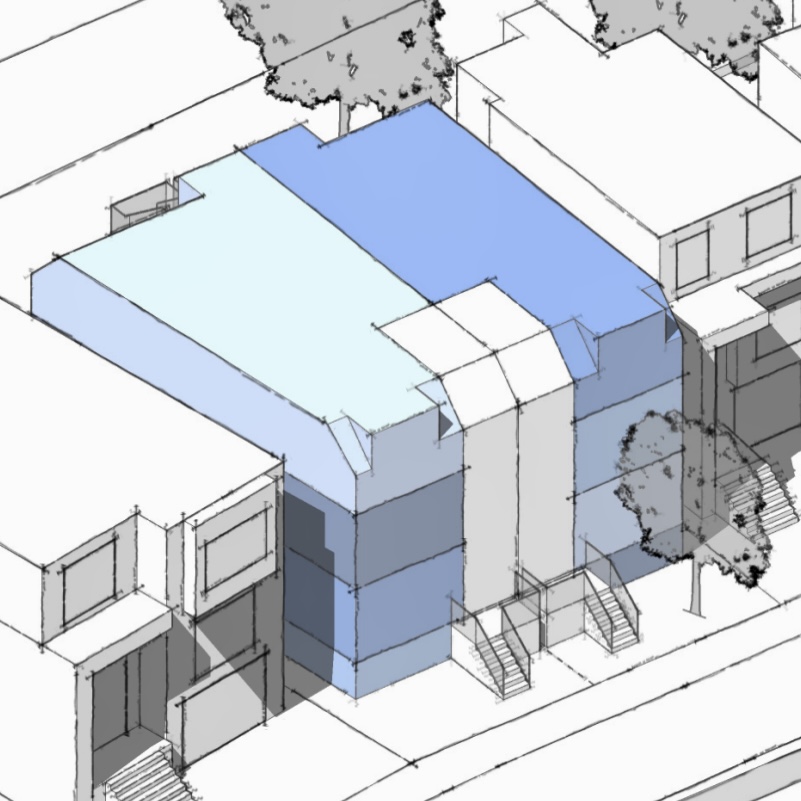
Toronto’s framework for neighbourhood housing is being fundamentally reshaped, what Modcity strongly believes is for the better, through new as-of-right sixplex zoning bylaws approved by City Council on June 26, 2025.
Read More
We don’t need to sugarcoat it, the condo market is in a tough spot right now. Assignments are plummeting, purchasers are facing funding shortfalls on closing, and developers are struggling to get projects off the ground due to proforma challenges.
Read MoreLet’s continue the conversation
Contact UsFootnotes
- CMHC. MLI Select program requirements. Eligibility, commitment categories and financing incentives. ↩
- CMLS Financial. CMHC Lending Program Update. Transition period for the updated new-construction energy criteria. ↩
- CMHC. Previous MLI Select energy-efficiency criteria attestation: NBC 2015 / NECB 2017 (French). Historical energy and greenhouse-gas thresholds. ↩
- CMHC. MLI Select energy-efficiency criteria attestation. Current NBC 2020 / NECB 2020 thresholds. ↩
- Ontario Energy Board. Historical electricity rates. Posted lower-tier Regulated Price Plan electricity charge in effect on October 13 of each year, 2006–2026, in nominal cents/kWh. Endpoints: 5.8¢ and 12.0¢ over exactly 20 years; CAGR = (12.0 ÷ 5.8)^(1/20) − 1 = 3.7021%. The series excludes delivery, regulatory charges, tax and separately applied rebates. It is a consistent tariff benchmark, not a record of a typical Toronto Hydro household’s paid prices. ↩
- Illustrative calculation, not an empirical system-output estimate or external forecast: $40,000 initial investment for a building with ten three-bedroom units in central Toronto; assumed first-year electricity cost savings of $5,000; savings grow by an assumed 3.70% annually for 20 years and are received at each year-end; no residual value. The resulting unlevered IRR is approximately 14.47% (14.5% rounded), before degradation, maintenance, replacement costs and taxes. The $5,000 savings figure is a scenario assumption, not a measured or modelled estimate of the building’s electricity use or solar generation. Applying past gross-tariff growth to future solar savings is an illustrative assumption, not a prediction of net bills or achievable savings. ↩
.webp)
.webp)